Discover Namibia’s extraordinary landscapes on two wheels and experience one of Africa’s most unique biking destinations.

Frequently Asked Questions
Planning a mountain bike adventure in Namibia often raises a few practical questions. From travel requirements and weather to bikes and equipment, we have gathered the most frequently asked questions here to help you prepare for your journey.
Our tours take you into some of the most remote and beautiful landscapes in Namibia – places defined by silence, vast open space and unforgettable riding.
Vaccinations and Visas
Since 1 April 2025, travellers from many European countries, including Switzerland, Germany and the United Kingdom, require a visa for Namibia. This can be obtained online or on arrival. All travellers must hold a passport valid for at least six months from the date of arrival, with at least three blank pages.
A yellow fever vaccination certificate is required when arriving from a risk country. Malaria precautions may be recommended for northern Namibia. Please consult a travel health professional and check the latest entry requirements before departure.
Is Namibia safe for travelers?
Namibia is considered one of the safest travel destinations in Africa. The country is politically stable and has a very low population density.
Our tours travel mostly through remote wilderness areas, and guests are accompanied by experienced local guides at all times.
What level of fitness is required?
Our mountain bike tours are designed for guests with a moderate to good level of fitness. Riding distances vary depending on the terrain and the day’s route but generally range between 30 and 70 kilometres per day.
Our support vehicle travels with the group, meaning that guests may take a break from riding at any time if they wish.
E-bikes are also available, making the tour accessible for riders who prefer additional assistance.
Is there a support vehicle during the tour?
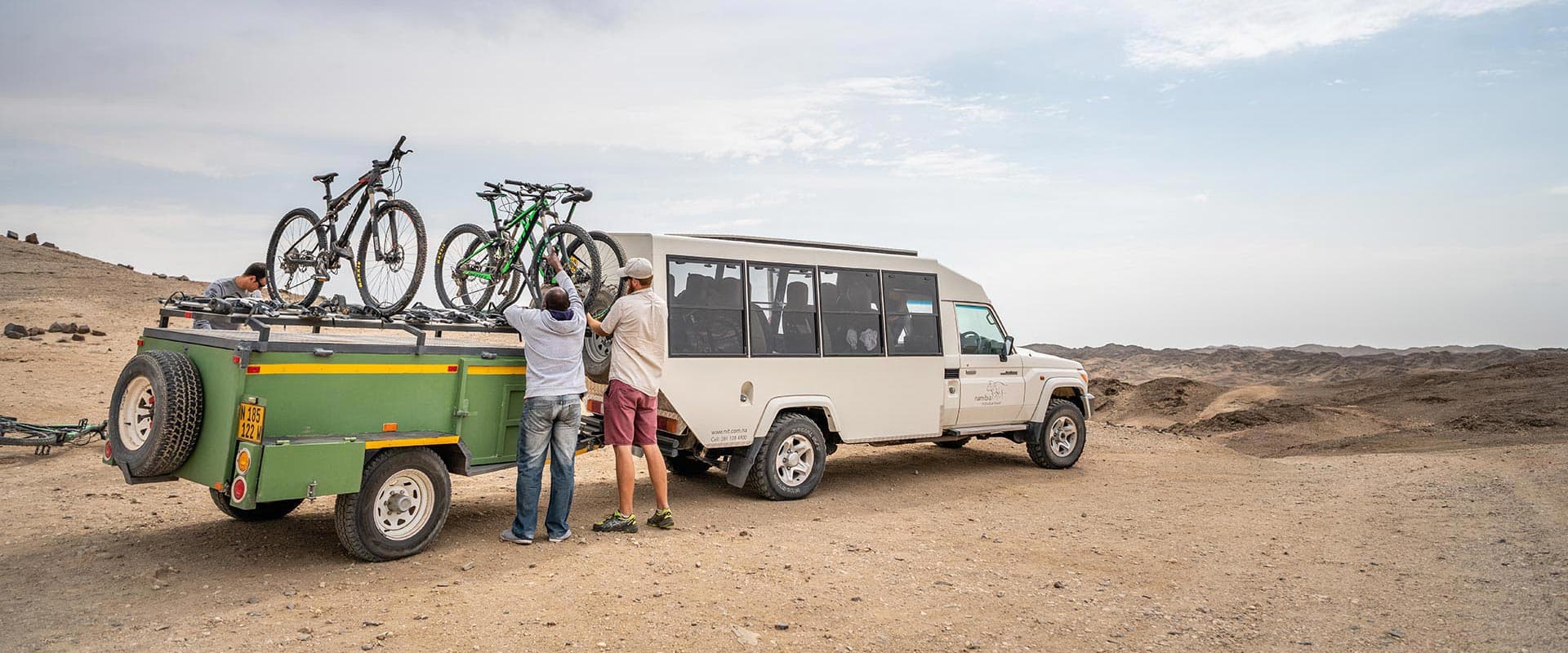
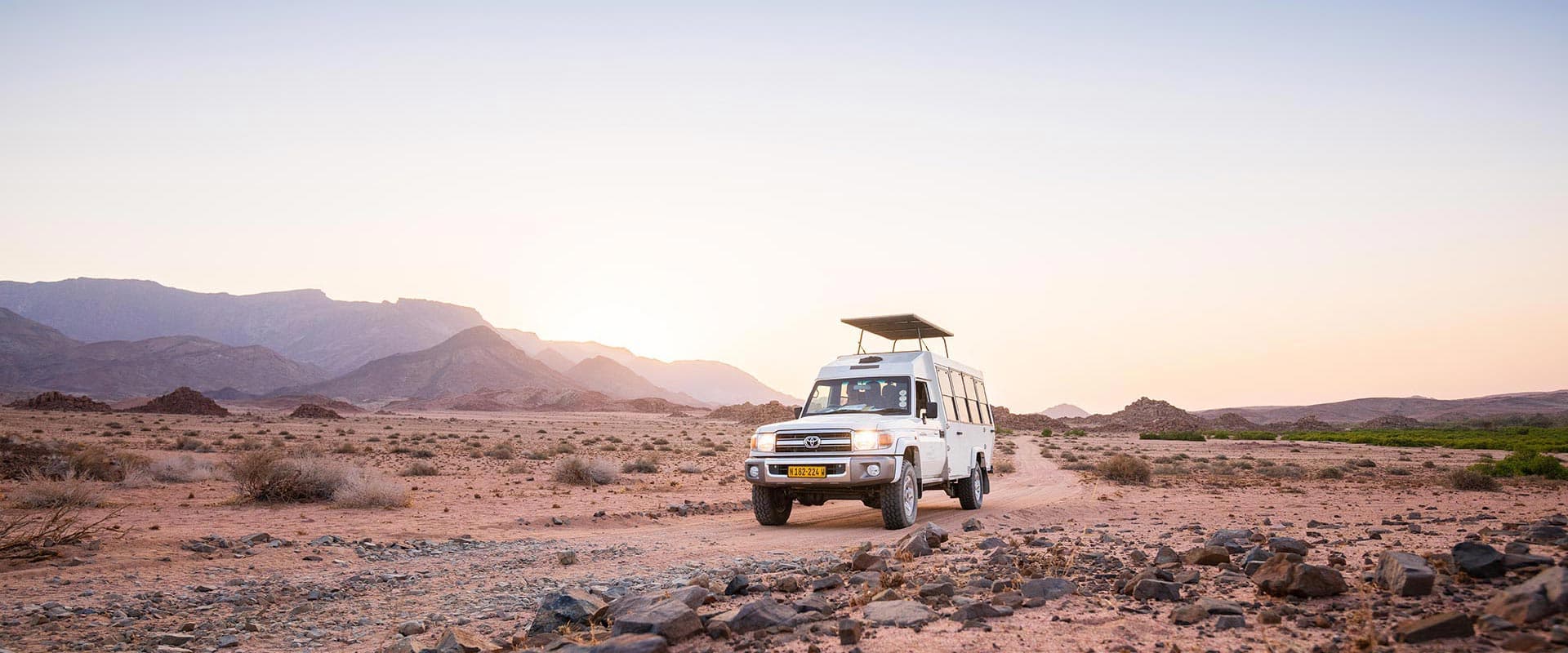
Yes. A support vehicle accompanies the group throughout the tour.
The vehicle carries luggage, spare bikes, water and refreshments. Guests may also choose to ride shorter sections of a stage and travel part of the route in the vehicle if needed.
Can I bring my own bike?
Yes, guests are welcome to bring their own mountain bike.
However, we recommend ensuring that the bike is suitable for gravel roads and rocky terrain. Please also bring spare tubes, brake pads and basic tools.
Alternatively, high-quality rental bikes are available for the duration of the tour.
How large are the tour groups?
To ensure a personal experience, our tours are run with small groups, typically between 4 and 14 guests.
Private or customised tours can also be arranged for smaller groups or families.
What can I expect from the terrain?
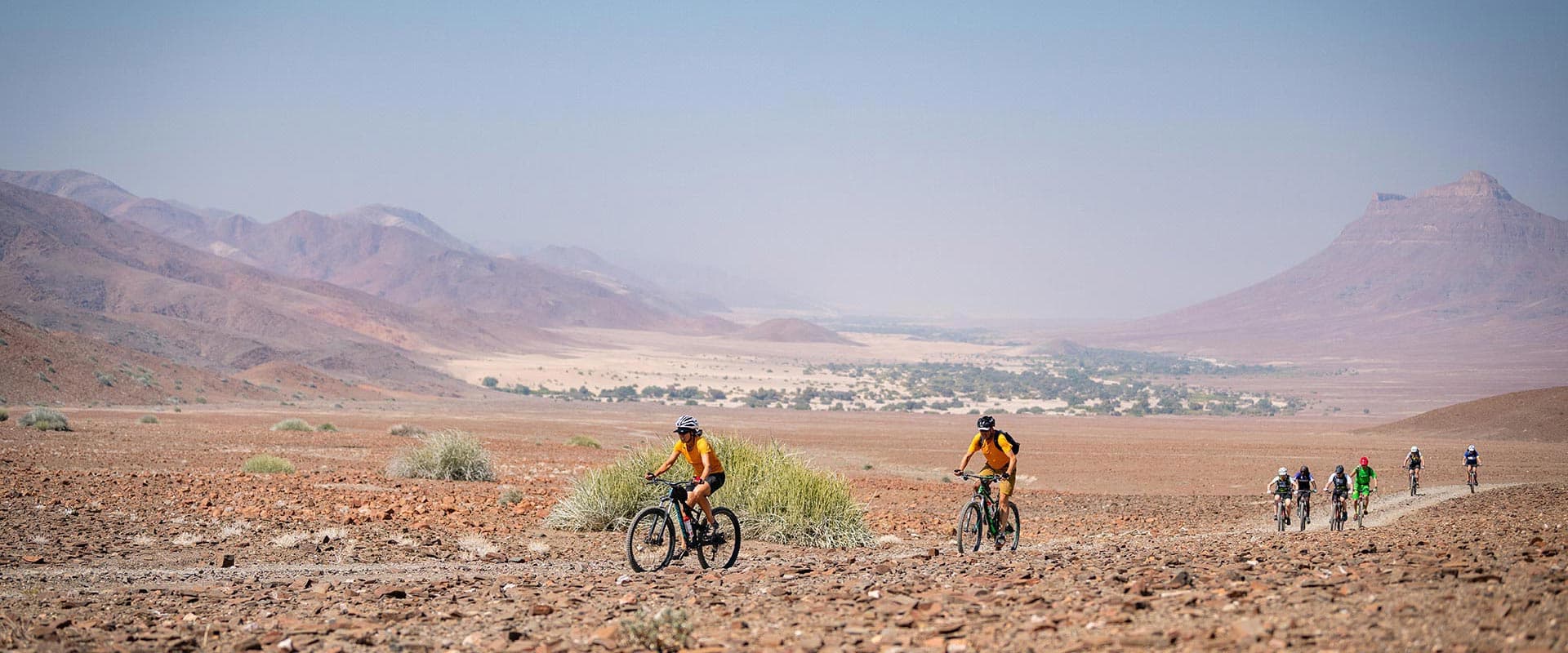
Our tours take place on quiet gravel roads, remote desert tracks and scenic farm trails.
Namibia offers an incredible variety of landscapes: wide desert plains, rugged mountains, dry riverbeds and open valleys. Some days we ride between overnight locations, while other days we explore beautiful routes through remote wilderness.
The terrain is part of the experience — vast landscapes, endless horizons and the feeling of riding through true wilderness.
How much traffic will we encounter?
Very little. We purposely choose quiet, remote roads and trails, and encounters with vehicles are rare. One of the highlights of biking in Namibia is the silence and open space, far away from busy roads and towns.
Will we meet many people during the tour?
Namibia is one of the least densely populated countries in the world.
Our routes pass through remote wilderness areas where encounters with other people are rare. This makes the experience truly special — riding through landscapes where you feel completely immersed in nature.
For guests interested in cultural encounters, custom tours including local communities can also be arranged.
Should we be concerned about wildlife?
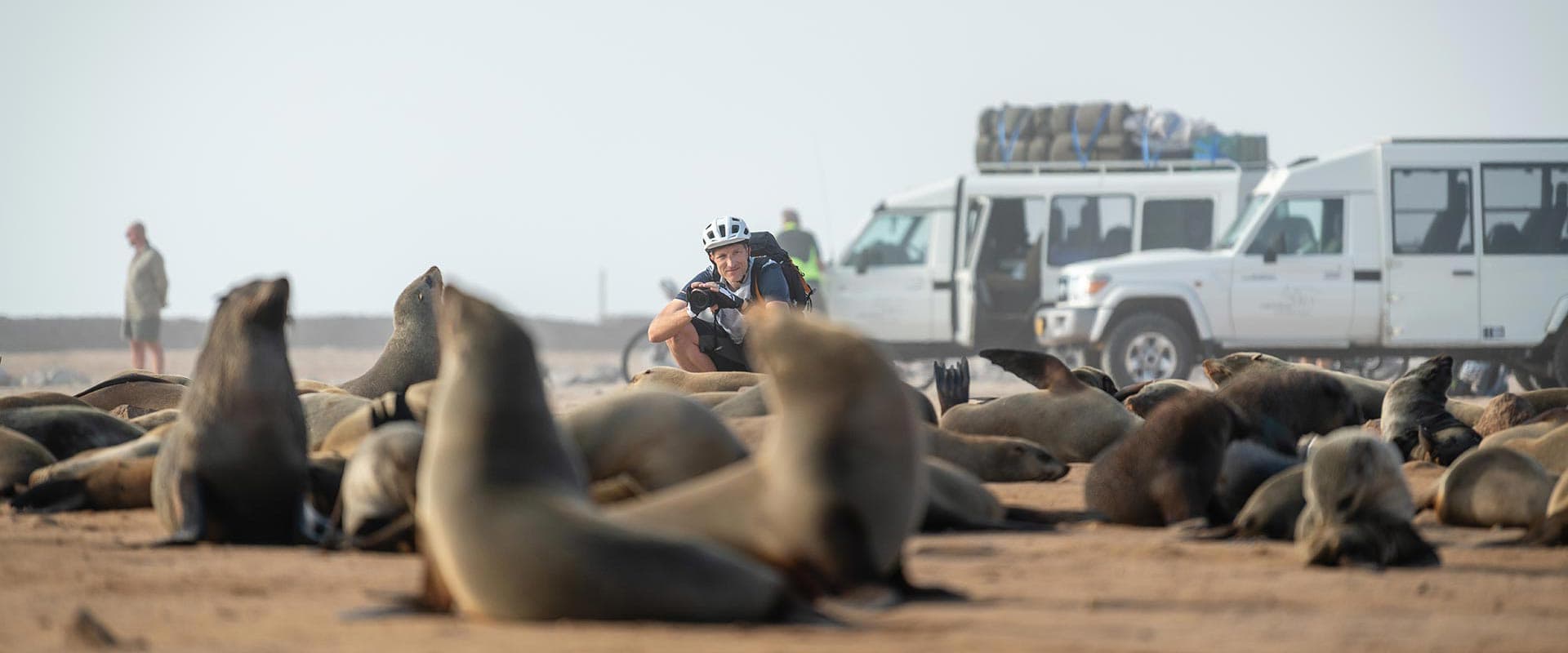
Namibia is home to an incredible variety of wildlife, including antelope, giraffe, zebra and predators.
Some of our tours travel through areas of north-western Namibia, where desert-adapted elephant, black rhino and occasionally desert lion occur.
There is generally no cause for concern. Wildlife naturally keeps its distance from people, and animals almost always move away long before we approach them. Your guides are experienced and trained in wildlife awareness and safety.
What is the weather like?
Namibia enjoys a dry desert climate with clear skies and warm sunshine for much of the year.
The rainy season usually occurs between November and March. The cooler, drier months between April and October are ideal for mountain biking.
During this time temperatures are pleasant and the landscapes are spectacular — perfect conditions to experience the space and beauty of Namibia on two wheels.
Eating & Drinking
Namibia is known for its excellent quality meat, fresh produce and good local cuisine.
Whether staying in lodges or camping, we provide wholesome and well-prepared meals, including fresh salads, fruits and refreshing drinks.
Our guides are also known for their excellent bush cooking, which often becomes a highlight of the trip.
What should I bring?
Documents
- Passport and copies
- Travel documents
- Credit card and some cash
Clothing
- Comfortable outdoor clothing
- Cycling shorts and jerseys
- Rain jacket
- Warm fleece for cooler evenings
- Sun hat and sunglasses
Other essentials
- Sunblock and lip protection
- Insect repellent
- Personal medication
- Headlamp or torch
- Camera and binoculars
What equipment does the guide carry?
Your guide carries a full support kit including:
- First aid kit
- GPS navigation
- Bike tools and spare parts
- Pumps and puncture repair kits
- Spare brake and gear cables
- Shock absorber pump
Is the camping comfortable?
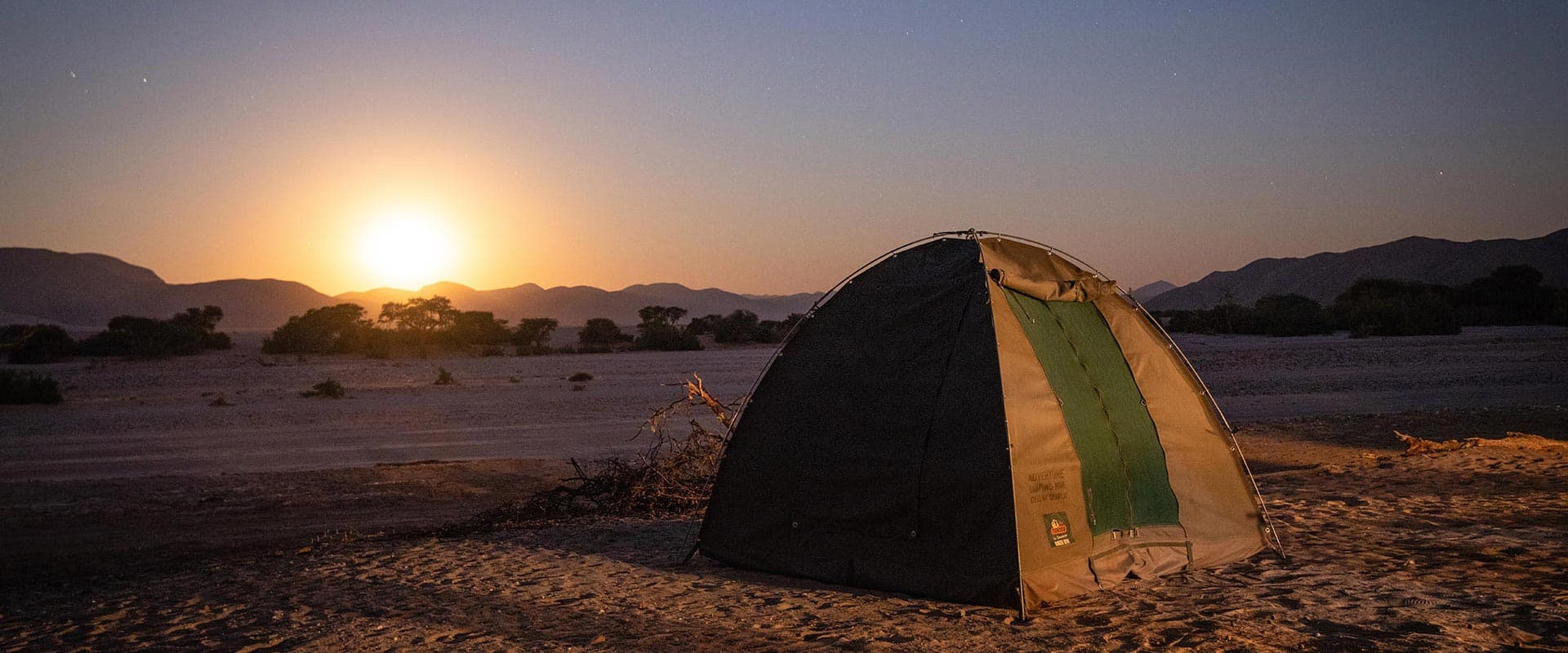
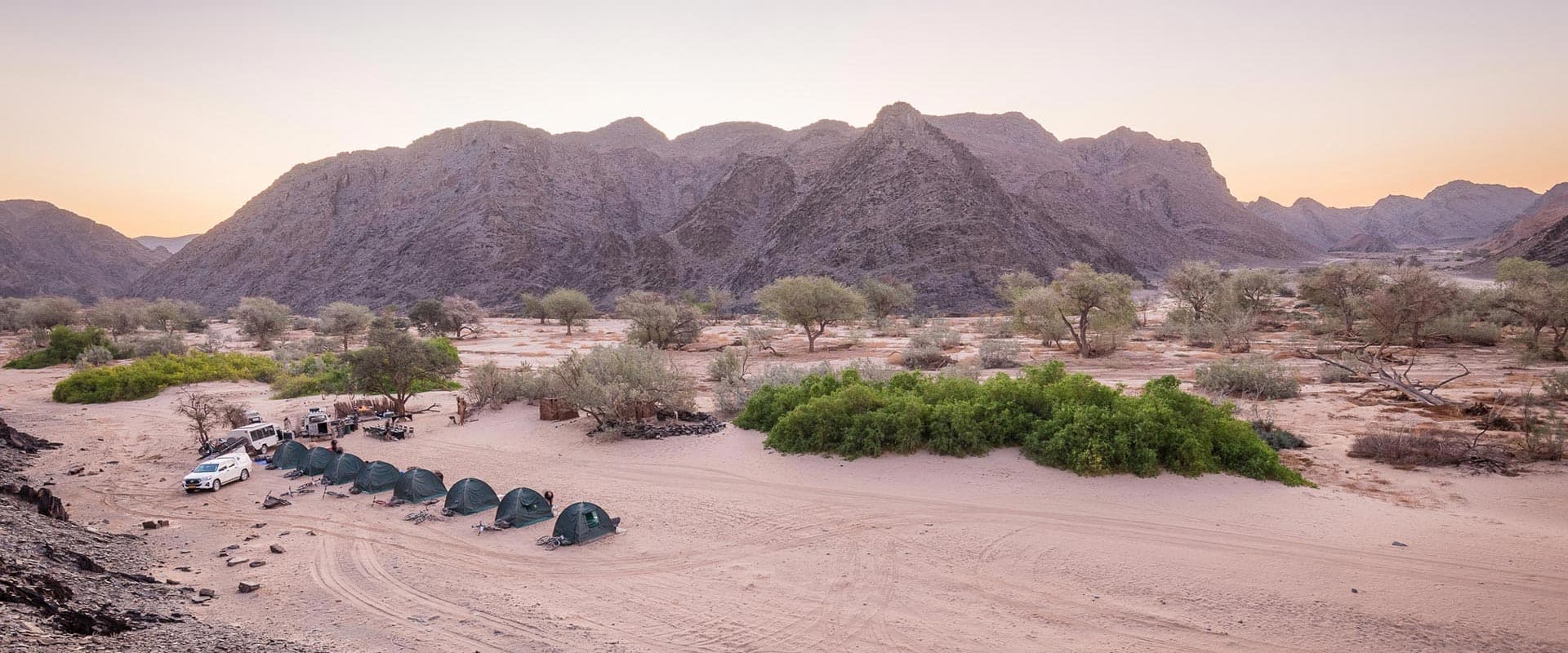
Yes. We provide spacious tents with comfortable mattresses, and meals are enjoyed under the stars with proper lighting.
Many guests are surprised to find that the meals prepared by our guides are often as good as — or even better than lodge meals.
What bikes are available to rent?
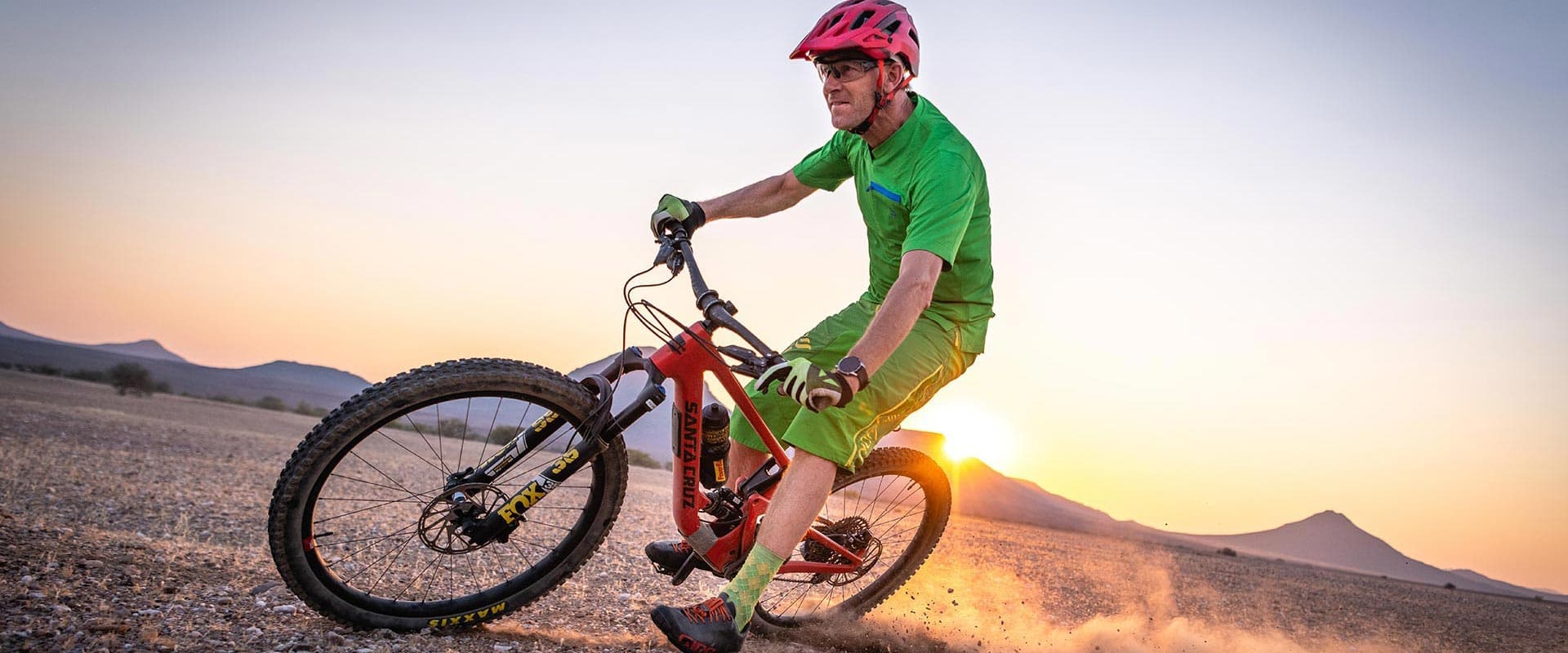
We use Scott 960 full-suspension mountain bikes with 29-inch wheels on our tours. These bikes are well suited to Namibia’s terrain and are equipped with tubeless puncture-resistant tyres.
The bikes are transported using specially designed bike trailers, which also carry luggage and camping equipment.
Are E-bikes available?
We offer Specialized MTB-E full-suspension electric mountain bikes.
The bikes feature:
- 29 × 2.35 inch tyres
- Double air rear shocks with lockout
- RST suspension fork
- 500W geared rear hub motor
- 48V 13Ah lithium-ion battery
These bikes make riding on rocky terrain and gravel roads comfortable and accessible for a wider range of riders.
What happens in case of mechanical problems?
Your guide carries a full set of tools and spare parts. Minor mechanical issues such as punctures or adjustments are easily repaired during the ride.
For larger problems, the support vehicle carries spare equipment and replacement bikes.
A subsidiary of
